Measuring blood pressure at home: a step-by-step guide
A practical, step-by-step guide to measuring blood pressure at home, how to record readings, what the two numbers mean and when to take the readings to a doctor.
- Rédigé par
- HealthNaro Editorial Team
- Publié
How this page was made: Drafted by the HealthNaro Editorial Team with AI assistance, checked against reputable health sources, and not yet clinically reviewed. Editorial policy
Pas encore relu cliniquement
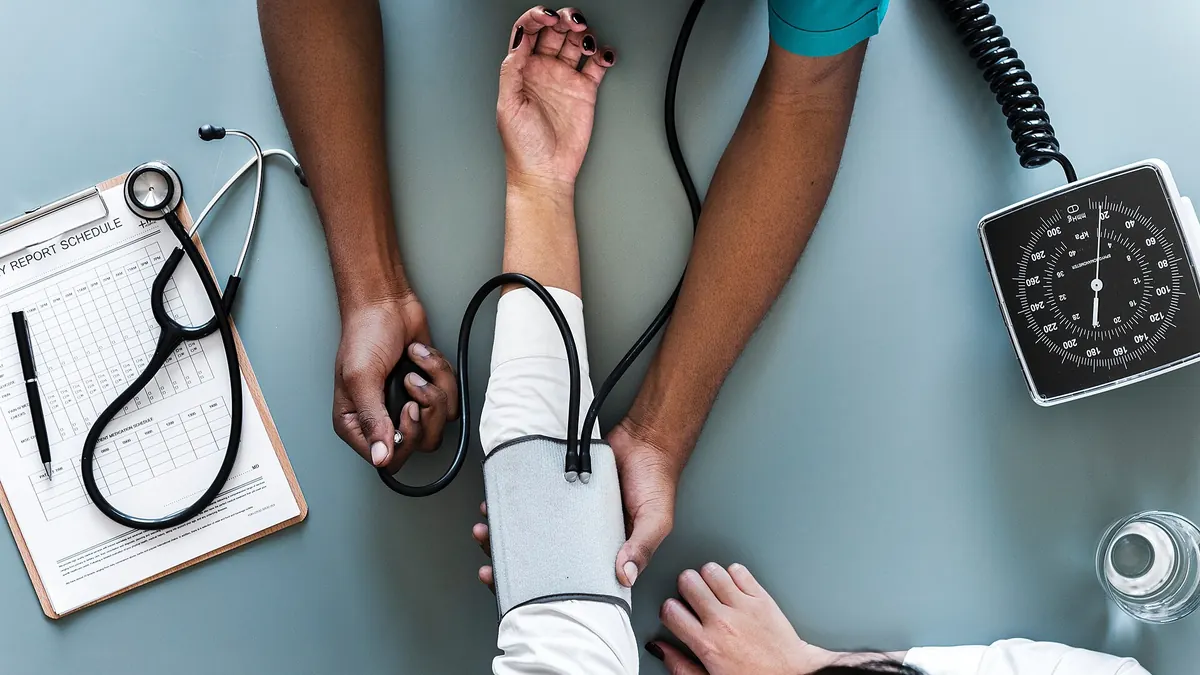
High blood pressure usually causes no symptoms, so the only way to know is to measure it. Home monitoring can give you and your clinician more information than a single reading in a clinic. This guide explains how to take readings at home, what to record, what the numbers mean and when to talk to a doctor. It follows NHS and World Health Organization (WHO) information and does not replace your own clinician's instructions.
Why measure at home
The WHO hypertension fact sheet, updated 25 September 2025, estimates that 1.4 billion adults aged 30 to 79 had hypertension in 2024, about a third of that age group, and that an estimated 600 million of them (44%) are unaware they have it. It states that the only way to know is to get your blood pressure checked, and that hypertension is defined as 140/90 mmHg or higher.
The NHS says a blood pressure test can be done at most pharmacies, at a GP surgery and at some workplaces, and that you can also buy your own machine. Home readings help in several ways: they show how your pressure behaves over days, they avoid some nervousness in a clinic, and they help a clinician judge whether treatment is working. They do not replace a professional check.
Choosing and preparing a monitor
The NHS says machines may differ slightly, so follow the instructions that come with yours. Points to consider:
- Type. The NHS refers to an inflatable armband (cuff) wrapped around the upper arm. Upper arm monitors are what the NHS describes; ask your clinician if you are unsure which type suits you.
- Cuff size. A cuff that does not fit your arm can give inaccurate readings. Check the size range on the box.
- Validation. Some monitors have been independently tested for accuracy. Ask your pharmacist or clinician about options, or check against a clinic reading by bringing the monitor to an appointment.
- Memory. A monitor that stores readings is convenient, though you should still keep a written record.
If a doctor or nurse needs you to monitor at home, they may give you a machine and show you how to use it.
Step by step
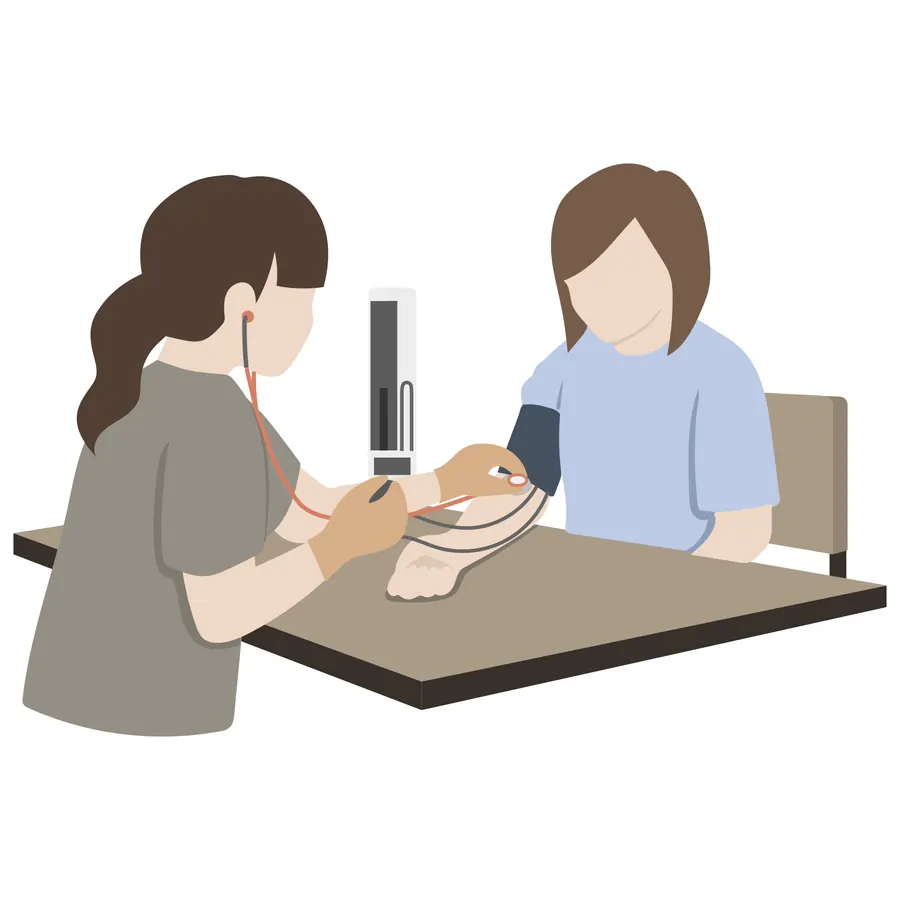
The NHS describes the basic position for a test: sit down, roll up your sleeve or remove long-sleeved clothing, outstretch your arm and rest it on a table, relax, and have the cuff wrapped around your upper arm. Stay in that position while the cuff inflates, which may feel uncomfortable for a few seconds. Based on that, a home routine is:
- Prepare. Sit quietly for a few minutes before measuring. Use the toilet first if you need to.
- Position. Sit with your back supported and your arm resting on a table at about heart height, with your sleeve rolled up or removed.
- Fit the cuff. Wrap the cuff on your bare upper arm as shown in the instructions.
- Stay still. Keep your arm relaxed and do not talk while the cuff inflates.
- Read and note. Write down the two numbers shown and the time.
- Repeat. The NHS says to wait 1 minute and then take your blood pressure again, and that you usually do this twice, once in the morning and once in the evening. Your doctor or nurse will tell you how many days to do this.
If your readings need to be monitored for 24 hours, the NHS says a clinic may fit you with a wearable monitor which you return the next day.
Keeping a record
Use a notebook or an app and record:
- the date and time;
- both numbers for each reading;
- any unusual factors, such as stress, pain, caffeine, exercise or missed sleep;
- whether you had taken any medicines that day, exactly as prescribed by your doctor.
Do not change medicines because of a home reading. Share the record with your clinician and let them advise. The British Heart Foundation, which the NHS links to, offers a blood pressure diary on its website.
What the numbers mean
Blood pressure is given as two numbers, such as 130/80. The first is systolic pressure, the highest level reached when the heart pumps. The second is diastolic pressure, the lowest level when the heart relaxes between beats.
According to the NHS, blood pressure is usually considered high if it is 140/90 or higher when checked by a healthcare professional, or 135/85 or higher when checked at home. These are the thresholds the NHS uses in England. Your clinician may use different targets for you depending on your age, other conditions and local guidelines.
One high reading does not mean you have hypertension. Pressure rises and falls during the day, and anxiety, pain, exercise or a full bladder can raise a reading. A pattern across several days is more informative.
When to talk to a doctor
- Your home readings are repeatedly at or above the home threshold your clinician uses.
- You are 40 or over and have not had your pressure checked for some time. The NHS advises a check at a pharmacy or GP surgery if you are 40 or over and have not had one for more than five years.
- You have other risk factors such as diabetes, kidney disease or a family history.
- Your readings differ widely from your clinic readings, so you want to understand why.
The WHO notes that lifestyle changes such as a healthier diet, stopping tobacco and being more active can help lower blood pressure, and that some people still need medicines. Your clinician can discuss what is suitable for you.
Emergency symptoms
Very high readings accompanied by symptoms such as severe headache, chest pain, shortness of breath, confusion, weakness on one side of the body or difficulty speaking need emergency care. Contact your local emergency number straight away and do not wait to take more readings.
Next steps
Our post on a Kenya hypertension and diabetes survey shows how widely checks are used in one country. The cardiology check-up and ECG guide describes what a heart check involves. You can find clinics under the cardiology topic, and read how to read your health check-up results once you have them. For help finding a clinic, send a free, non-medical inquiry.
Frequently asked questions
Which arm should I use?
Follow your monitor's instructions and your clinician's advice. If told to use one arm, use the same arm each time so readings can be compared.
Is a home monitor as accurate as a clinic one?
It can be, if it fits well and is used correctly. Bring it to an appointment to compare with a clinic device.
What time of day should I measure?
The NHS says people are usually asked to measure once in the morning and once in the evening. Your clinician will tell you the schedule for you.
Can I stop monitoring if my readings are normal?
Ask your clinician. People with high blood pressure are often asked to keep checking, while others check periodically.
General information only
This article is general information, not medical advice. Ask a qualified clinician about your own readings and targets.
Si vous pensez être en situation d'urgence médicale, contactez immédiatement les services d'urgence locaux ou rendez-vous aux urgences les plus proches. N'attendez pas la réponse d'une fiche d'annuaire.
Besoin d'aide pour trouver cardiology ?
Dites-nous ce dont vous avez besoin et où. Nous vous contactons, comprenons votre situation et vous aidons à trouver et à choisir une clinique adaptée. Ce service est gratuit pour les patients.
Plus sur le blog
-
Article de blog
Eczema or psoriasis: how to tell the difference
How atopic eczema and psoriasis typically look, where they appear, when they start and when to see a doctor for either.
3 novembre 2026
-
Article de blog
Digital eye strain: why screens tire your eyes and what helps
What causes tired, dry or blurry eyes after screen use, practical steps from the American Academy of Ophthalmology, and when to book an eye test.
3 novembre 2026
-
Article de blog
Bleeding gums when brushing: causes and when to see a dentist
Why gums bleed when you brush or floss, how to clean them gently, and the signs that mean a dentist should take a look.
3 novembre 2026