How often should you go to the dentist?
Why the gap between check-ups differs from person to person, what NICE guidance says, and when not to wait for the next appointment.
- Rédigé par
- HealthNaro Editorial Team
- Publié
How this page was made: Drafted by the HealthNaro Editorial Team with AI assistance, checked against reputable health sources, and not yet clinically reviewed. Editorial policy
Pas encore relu cliniquement
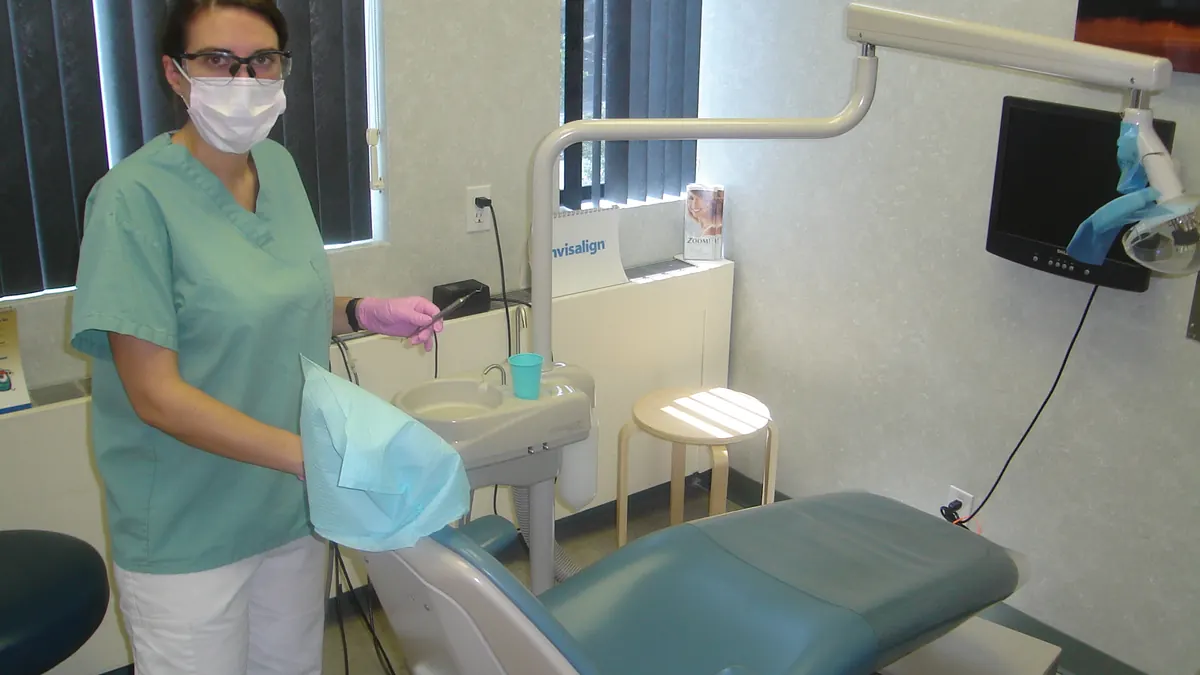
"Twice a year" is the answer many people have heard, but it is not a rule that suits everyone. Guidance from the National Institute for Health and Care Excellence (NICE) in England says the gap between check-ups should be set for each person according to their risk of dental disease. This post explains how that works, what influences your interval and what to do if you have not been for a long time.
The short answer
- There is no single interval for everyone. NICE says the recall interval should be decided for each patient after an assessment of their disease levels and risk.
- NICE sets the shortest interval between routine oral health reviews at 3 months, and the longest for people under 18 at 12 months.
- The NHS says you should have regular check-ups even if you have no problems, and to see a dentist if you have not had a check-up for 2 years, or 1 year if you are under 18.
- Go sooner than your next booked visit if you have pain, bleeding gums, swelling or a broken tooth.
Why the interval differs between people
A check-up is not only a look for holes. NICE describes the review as taking a history, examining the mouth and giving preventive advice. The dentist then chooses the next date after discussing:
- how well you clean your teeth and gums, and what you eat and drink
- your use of fluoride, tobacco and alcohol
- how your teeth and gums have fared at past visits
- your general health and any risk factors
- your own ability or wish to attend at that interval, including cost
Someone who has had no decay for years and cleans well may be safely seen less often than someone with active gum disease or several fillings. NICE notes that decay can progress more quickly in children and teenagers, which is why the longest interval for under 18s is shorter.
What happens at a check-up
A routine visit usually includes:
- questions about your health, medicines, symptoms and habits
- a look at your teeth, gums, tongue, cheeks and throat
- X-rays only if they are needed for a reason
- advice on cleaning, diet and, if relevant, smoking
- agreement on when to come back
Some people also see a hygienist for a professional clean. Our dental check-up and cleaning guide walks through the stages. For adults looking for a first appointment, the general dental consultation page describes the service.
Children and pregnancy
The NHS says anyone under 18 who has not had a check-up for a year should see a dentist. An early first visit also helps a child become used to the dental chair. Our post on the first dental visit for a child and the children's dental check-up guide cover this.
The NHS also points out that people who are pregnant, or who have type 2 diabetes, should see a dentist regularly because of the link with gum disease. In England, check-ups are free during pregnancy and for a year after birth. Rules on cost vary elsewhere, so ask the clinic.
Signs you should not wait for your next check-up
Do not wait for a routine date if you notice:
- toothache that lasts more than two days
- gums that bleed, are swollen or are painful
- a sharp pain when you eat or drink something hot, cold or sweet
- a persistent bad taste or breath that does not go away
- white, red or dark patches, ulcers or lumps in the mouth that do not clear up
- a loose, chipped or broken tooth
Our posts on bleeding gums and toothache give more detail.
If it has been years since your last visit
Many people delay because they worry about what the dentist will find, the cost, or being judged. A few steps can make it easier:
- Say at the start that it has been a long time. Dentists see this often.
- Ask the dentist to explain each step before it happens, and agree a signal for a pause.
- Ask for a written plan with the order of any treatment, and ask about costs before you agree.
- If you feel anxious, say so when you book.
If you want help finding a clinic in a particular city, you can use HealthNaro search to look at listed dentists in Kenya or Iceland, or send an inquiry. Listings are a directory and not a recommendation of any practice, so check the registration of any dentist you plan to see.
Frequently asked questions
Is twice a year necessary?
Not for everyone. Some people are advised to come every 6 months, others less often. The right gap depends on your risk, and your dentist should explain the reason for it.
Can I just go when something hurts?
You can, but problems such as early decay and gum disease often cause no pain at first. A routine check can find them while treatment is simpler.
How often should children go?
Under NICE guidance the longest interval for under 18s is 12 months, and the NHS says to see a dentist if a child has not had a check-up in a year. Your dentist may suggest a shorter gap if your child has had decay.
Do I need X-rays at every visit?
No. They are used when there is a clinical reason, and the interval depends on your risk. Ask your dentist why one is needed.
General information only
This article is general information, not dental advice. Guidance referred to is from England and may differ in your country. If you have swelling, severe pain or difficulty breathing or swallowing, seek urgent medical care.
Si vous pensez être en situation d'urgence médicale, contactez immédiatement les services d'urgence locaux ou rendez-vous aux urgences les plus proches. N'attendez pas la réponse d'une fiche d'annuaire.
Besoin d'aide pour trouver un prestataire ?
Dites-nous ce dont vous avez besoin et où. Nous vous contactons, comprenons votre situation et vous aidons à trouver et à choisir une clinique adaptée. Ce service est gratuit pour les patients.
Plus sur le blog
-
Article de blog
Toothache: when to see a dentist and when it is an emergency
What commonly causes toothache, how long it is reasonable to wait, and the signs of swelling or infection that need urgent care.
5 novembre 2026
-
Article de blog
Bleeding gums when brushing: causes and when to see a dentist
Why gums bleed when you brush or floss, how to clean them gently, and the signs that mean a dentist should take a look.
3 novembre 2026
-
Article de blog
Choosing a dentist in a new country: ten questions to ask
Moving or living abroad means finding a dentist from scratch. Ten practical questions to ask before a first visit, from registration and language to emergency cover and records.
1 novembre 2026