Back pain: when to see a physiotherapist, a doctor or get a scan
Most low back pain has no single identifiable cause. How to decide between self-care, a physiotherapist and a doctor, which symptoms need urgent attention, and why a scan is not always the first step.
- Verfasst von
- HealthNaro Editorial Team
- Veröffentlicht
How this page was made: Drafted by the HealthNaro Editorial Team with AI assistance, checked against reputable health sources, and not yet clinically reviewed. Editorial policy
Noch nicht klinisch geprüft
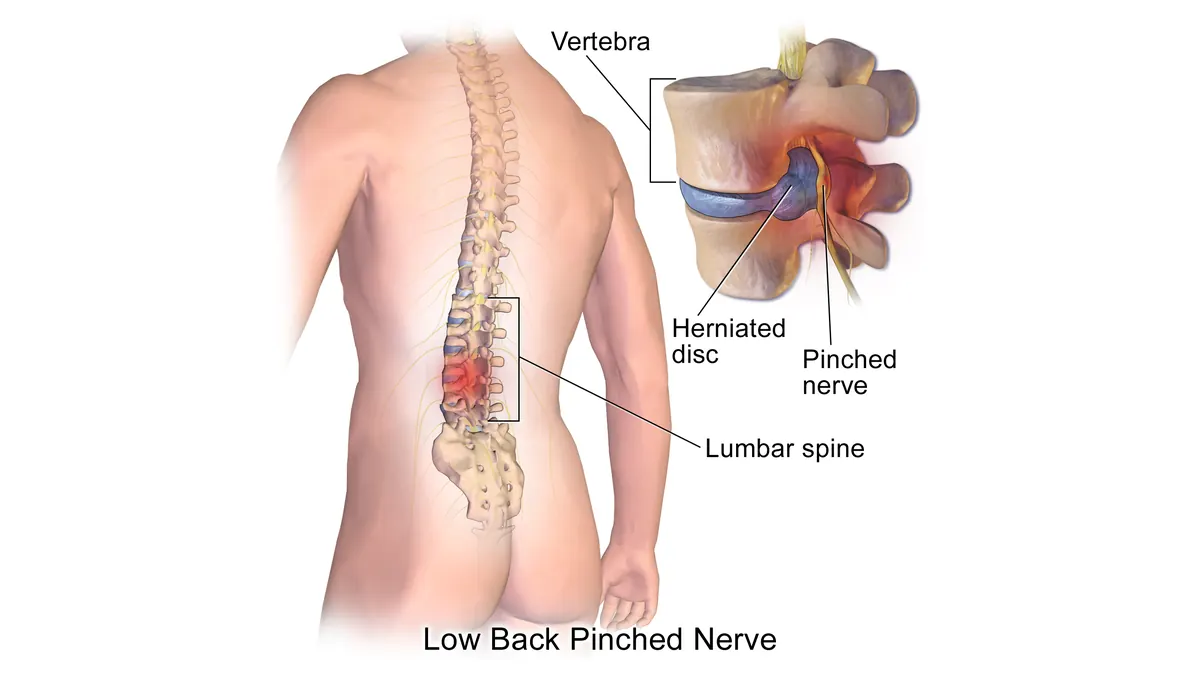
Back pain is common and often settles, yet it can feel alarming when it starts. The decisions that matter are practical ones: whether to try self-care first, whether to see a physiotherapist or a doctor, whether a scan is useful, and which symptoms mean you should seek urgent care. This post sets out how to think about each.
How common it is
The World Health Organization (WHO) reports in its low back pain fact sheet, published 19 June 2023, that in 2020 low back pain affected 619 million people globally, and that the number is expected to reach 843 million by 2050, driven largely by population growth and ageing. WHO says it is the single biggest cause of disability worldwide, can be experienced at any age, and that most people experience it at least once in their life.
WHO also explains that low back pain is described as specific or non-specific. Specific pain is caused by a certain disease or structural problem in the spine, or radiates from another part of the body. In about 90% of cases the pain is non-specific, meaning no particular disease or structural reason can be identified. That matters for scans, as discussed below.
Start by checking for red flags
Some symptoms need prompt medical care. The NHS sets out three levels of action for back pain.
Call emergency services or go to an emergency department if back pain comes with:
- pain, tingling, weakness or numbness in both legs;
- loss of feeling around the genitals or anus;
- changes in bladder or bowel control, such as difficulty passing urine or losing control;
- chest pain;
- a start after a serious accident.
Ask for an urgent appointment or call a health advice line if you feel hot, cold, shivery or generally unwell, or if severe pain starts suddenly or is getting worse quickly.
See a doctor if the pain does not improve after treating it at home for a few weeks, stops you doing day-to-day activities, worries you or you are struggling to cope, if you have lost weight without trying, if there is a lump or swelling or the back has changed shape, if the pain is worse at night or does not improve with rest, if it is worse when sneezing, coughing or on the toilet, or if it is in the upper back between the shoulders rather than the lower back.
If any of the first group applies, do not wait to read further. Seek emergency care.
When a physiotherapist makes sense
A physiotherapist assesses how your back and body move, helps you understand the pain, and can guide movement, exercise and return to activity. WHO states that in all types and at all stages of low back pain, rehabilitation is essential to reassure people, help them make sense of their pain and return to activities they enjoy.
Physiotherapy is often a sensible choice for:
- non-specific low back pain without red flag symptoms;
- pain that is limiting work, sport or daily tasks;
- pain that has lasted more than a few days and is not settling;
- recurring back pain, where guidance on movement and strength can help;
- pain after an injury, once serious causes have been ruled out.
The NHS notes that in many areas you may be able to get physiotherapy from community musculoskeletal services without a referral from a GP. Rules differ by country, and in some places a doctor's referral is needed for insurance purposes. Our physiotherapy for back pain guide describes a typical course of appointments.
When to see a doctor first
A doctor is the better first contact if:
- you have any of the red flag symptoms above;
- you are unwell in other ways, such as a fever or unexplained weight loss;
- you have a history of cancer, osteoporosis or a recent fall or injury;
- your pain is unusually severe, is in the upper back or wakes you at night;
- you are not sure what is going on.
A doctor can examine you, decide whether tests are needed, discuss pain relief options appropriate for you and refer you on. Pain relief choices depend on your health and other medicines, so discuss them with a doctor or pharmacist rather than self-selecting.
Do I need a scan?
Many people expect an x-ray or MRI for back pain. In most cases of non-specific low back pain, a scan does not identify a cause, because WHO says that in around 90% of cases no specific structural reason can be found. Scans can also show changes that are common with age and may have nothing to do with the pain, which can cause worry without changing treatment.
Scans are generally used when a clinician suspects a specific cause, when red flag features are present, or when the result would change the plan, for example before surgery or injections. The NHS describes an MRI scan as a way of taking detailed pictures of the inside of the body, used to help diagnose conditions, plan treatment and check how treatment is working. Whether you need one is a clinical decision.
The UK's National Institute for Health and Care Excellence (NICE) publishes a guideline, NG59, on assessing and managing low back pain and sciatica in people aged 16 and over. It covers physical, psychological, pharmacological and surgical treatments, and was last updated on 29 July 2026. If you want to see how a national guideline approaches the topic, you can read it, though it is written for clinicians. Our imaging guide explains the differences between the scan types.
What you can do while you wait
The NHS describes self-care for back pain as staying as active as you can, and avoiding prolonged bed rest, although the right pace depends on you. Speak to a pharmacist or doctor about pain relief and do not take anything that you have been told to avoid. Pain that does not improve after a few weeks needs assessment.
Choosing a clinic
Check that a physiotherapist is registered in the country where you are being treated. Our post on how to verify doctor registration explains the approach, which also works for physiotherapists. You can browse the physiotherapy topic and our guide to orthopaedic consultation for joint pain if a joint problem is suspected. For help finding a clinic, send a free, non-medical inquiry.
Frequently asked questions
Should I rest in bed with back pain?
The NHS advises keeping active where you can instead of resting in bed for long periods. Ask a clinician for advice that fits your situation.
Can a physiotherapist order a scan?
It depends on the country and setting. Some physiotherapists can request imaging, while in other places a doctor does.
Is sciatica different from back pain?
Sciatica is pain that travels down the leg, often caused by irritation of a nerve in the back. The NHS and NICE both cover it; see a doctor if you have leg weakness or numbness.
How long does back pain last?
It varies. Many episodes settle within weeks, and others last longer or come back. See a doctor if it is not improving.
General information only
This article is general information, not medical advice. If you have any of the emergency symptoms listed above, seek emergency care immediately.
Wenn Sie glauben, einen medizinischen Notfall zu haben, kontaktieren Sie sofort den örtlichen Notdienst oder gehen Sie in die nächste Notaufnahme. Warten Sie nicht auf die Antwort eines Verzeichniseintrags.
Brauchen Sie Hilfe bei der Suche nach physiotherapy?
Sagen Sie uns, was Sie brauchen und wo. Wir melden uns bei Ihnen, verstehen Ihre Situation und helfen Ihnen, eine geeignete Klinik zu finden und auszuwählen. Dieser Service ist für Patienten kostenlos.
Mehr aus dem Blog
-
Blogbeitrag
Eczema or psoriasis: how to tell the difference
How atopic eczema and psoriasis typically look, where they appear, when they start and when to see a doctor for either.
3 November 2026
-
Blogbeitrag
Digital eye strain: why screens tire your eyes and what helps
What causes tired, dry or blurry eyes after screen use, practical steps from the American Academy of Ophthalmology, and when to book an eye test.
3 November 2026
-
Blogbeitrag
Bleeding gums when brushing: causes and when to see a dentist
Why gums bleed when you brush or floss, how to clean them gently, and the signs that mean a dentist should take a look.
3 November 2026