An eye test and new glasses: what happens and how often to go
What a comprehensive eye examination checks beyond reading a chart, who should have one and how often, choosing spectacles or contact lenses, and what affects the price.
- Verfasst von
- HealthNaro Editorial Team
- Veröffentlicht
How this page was made: Drafted by the HealthNaro Editorial Team with AI assistance, checked against reputable health sources, and not yet clinically reviewed. Editorial policy
Noch nicht klinisch geprüft
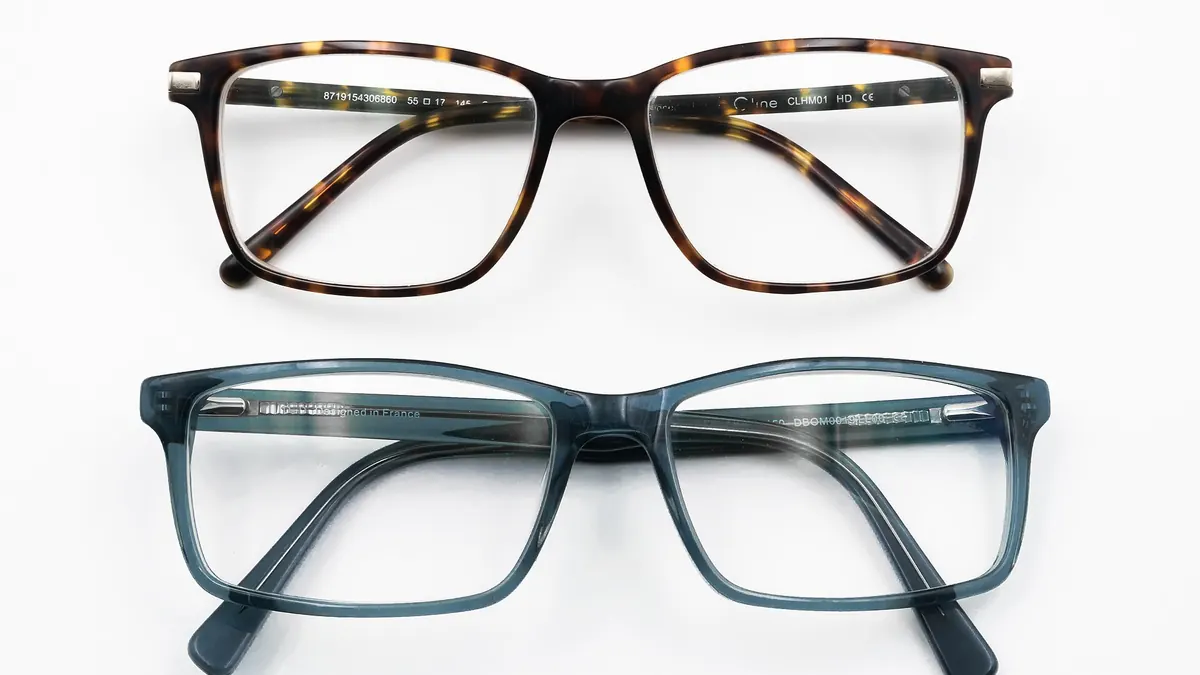
What it is
An eye test, more formally a comprehensive eye examination or sight test, measures how well you see and checks the health of your eyes. It is carried out by an optometrist or, in some settings, an ophthalmologist. The outcome may be a prescription for spectacles or contact lenses, reassurance, advice, or referral for a condition such as cataract, glaucoma or diabetic eye disease. Many eye diseases have no early symptoms, which is why the health check is as important as the prescription.
Uncorrected refractive error (needing glasses and not having them) and cataract are the leading causes of vision impairment worldwide, according to the World Health Organization's fact sheet on blindness and vision impairment (10 February 2026). The WHO estimates at least 2.2 billion people have a near or distance vision impairment, and that in at least one billion of them it could have been prevented or has not yet been addressed. A pair of correctly prescribed glasses is one of the simplest treatments in all of healthcare.
Who it is for and when it is recommended
Everyone should have their eyes examined periodically, including people who think they see well. The American Academy of Ophthalmology's Eye Exams 101 (reviewed February 2024) suggests a complete examination every five to ten years for healthy adults under 40, with increasing frequency after that and every one to two years from age 65; it advises contact lens wearers to be seen yearly and anyone with diabetes, high blood pressure, a family history of eye disease or other risk factors to be examined sooner and more often. National schemes often fund a test every two years for adults, and more often for children, older people and those with diabetes or glaucoma risk. Children's eyes should be checked at the ages recommended in your country's child health programme.
Book promptly if you notice blurred or double vision, headaches with close work, difficulty driving at night, haloes around lights, or if your current glasses no longer seem right. Seek urgent care for sudden loss of vision, a sudden shower of floaters or flashes, a curtain across part of your vision, or a painful red eye.
What happens at the appointment
A comprehensive examination usually takes 20 to 45 minutes, longer if your pupils are dilated. The AAO lists the components you should expect:
- History. Your symptoms, general health, medicines, family eye history and how you use your eyes at work and for screens.
- Visual acuity. Reading letters on a chart at distance and near, with and without your current glasses.
- Refraction. The optometrist places lenses in front of your eyes, often using an instrument called a phoropter, and asks which is clearer until the prescription is settled. An automatic machine may give a starting point.
- Eye movements and alignment. Checking that the eyes work together.
- Eye pressure. Tonometry, by a puff of air or a gentle probe, to screen for glaucoma.
- Slit lamp examination. A microscope to inspect the lids, cornea, iris and lens, which is how cataract is seen.
- Retina and optic nerve. Through the pupil with a lens or a retinal camera; dilating drops may be used to widen the pupil. Some practices offer an optical coherence tomography (OCT) scan, which images the layers of the retina.
- Visual field test if glaucoma or a neurological cause is suspected.
Choosing glasses follows, with a dispensing optician measuring the distance between your pupils and advising on lens types (single vision, bifocal, varifocal), materials and coatings.
How to prepare
Bring your current glasses or contact lenses and, if you have them, previous prescriptions. Wear your contact lenses to the appointment only if asked; some tests need them out for a period beforehand. Bring a list of medicines and note any family history of glaucoma, macular degeneration or diabetes. Think about how you use your eyes: screen distance, driving, reading, sport. If dilating drops are likely, bring sunglasses and arrange not to drive afterwards, as the AAO notes your eyes may be light-sensitive for some hours.
Afterwards and recovery
An eye test has no recovery period, apart from blurring and light sensitivity for a few hours if drops were used. A new prescription can take a few days to adjust to, especially varifocals; persistent headaches or distortion after a week or two should be reported, because a small error in the lenses or the fitting can be corrected. Ask for a copy of your prescription; in many countries you are entitled to it and can have glasses made anywhere. Note the recommended date for your next test.
Risks and limitations (sourced)
The examination is safe. Dilating drops cause temporary blurring and light sensitivity and, rarely, a pressure rise in people with a particular eye anatomy, which is why the practitioner checks first. Tonometry by air puff is harmless; the contact method uses an anaesthetic drop. The main limitation is that a sight test is a snapshot: the WHO notes that most people with vision impairment are over 50 and that everyone who lives long enough will experience at least one eye condition, so an unremarkable test does not mean the next one can be skipped. Glasses correct focus but do not treat disease. The NHS cataracts page notes that cataracts develop gradually and that updated glasses may help for a time, but surgery is the only way to remove them.
What affects the cost
Fees vary by country and practice, and some national schemes fund tests for eligible groups. Factors include:
- Whether the examination fee includes retinal photography or an OCT scan.
- Dilation or additional tests such as visual fields.
- Frame choice, from basic to designer.
- Lens type: single vision, bifocal or varifocal; thinner high-index materials; coatings for anti-reflection, scratch resistance or blue light; photochromic or tinted lenses.
- Contact lenses, which carry an additional fitting fee and ongoing supply costs.
- Coverage by a national scheme, voucher system or insurance.
Ask for an itemised quote and your written prescription. HealthNaro does not publish prices unless they come from a named, dated source.
Questions to ask the provider
- Is my eye health normal, and were any changes seen since my last test?
- Has my prescription changed, and do I need new lenses or just new frames?
- Which lens type suits how I use my eyes, and what do the coatings add?
- Do I need a retinal scan or pressure check today, and why?
- When should I come back, and sooner if what happens?
- Can I have a copy of my prescription?
- If something was found, who will you refer me to and how urgent is it?
How to find and check a provider
HealthNaro lists eye clinics, optometrists and ophthalmologists with a verification label on every listing. Public listing means the details came from public sources and have not yet been checked. Contact verified means the provider has confirmed their phone number and email address. Reviewed by HealthNaro means our team has looked over the listing's details. Credentials verified means we have seen a licence or registration document. A label describes what has been checked; it is not a recommendation or a ranking, and HealthNaro does not endorse any provider.
Check the practitioner's registration with your national optometry or medical regulator. You can browse providers under Optometry. If you would like help finding a suitable clinic, our consulting service is free: send a request through the inquiry form and we will come back to you with options. You choose whom to contact.
This guide is general information, not medical advice. Speak to a registered optometrist or ophthalmologist about your own situation.
Wenn Sie glauben, einen medizinischen Notfall zu haben, kontaktieren Sie sofort den örtlichen Notdienst oder gehen Sie in die nächste Notaufnahme. Warten Sie nicht auf die Antwort eines Verzeichniseintrags.
Brauchen Sie Hilfe bei der Suche nach optometry?
Sagen Sie uns, was Sie brauchen und wo. Wir melden uns bei Ihnen, verstehen Ihre Situation und helfen Ihnen, eine geeignete Klinik zu finden und auszuwählen. Dieser Service ist für Patienten kostenlos.
Passende Ratgeber
-
Ratgeber
Cataract surgery: how it works, recovery and the risks to understand
What a cataract is, when surgery is recommended, what happens on the day, lens choices, the recovery timeline and the complications to discuss with your surgeon.
31 Oktober 2026