Dental check-up and professional cleaning: what to expect
What happens at a routine dental examination and scale and polish, how often to go, how to prepare, and the questions to ask before you book.
- Verfasst von
- HealthNaro Editorial Team
- Veröffentlicht
How this page was made: Drafted by the HealthNaro Editorial Team with AI assistance, checked against reputable health sources, and not yet clinically reviewed. Editorial policy
Noch nicht klinisch geprüft
What it is
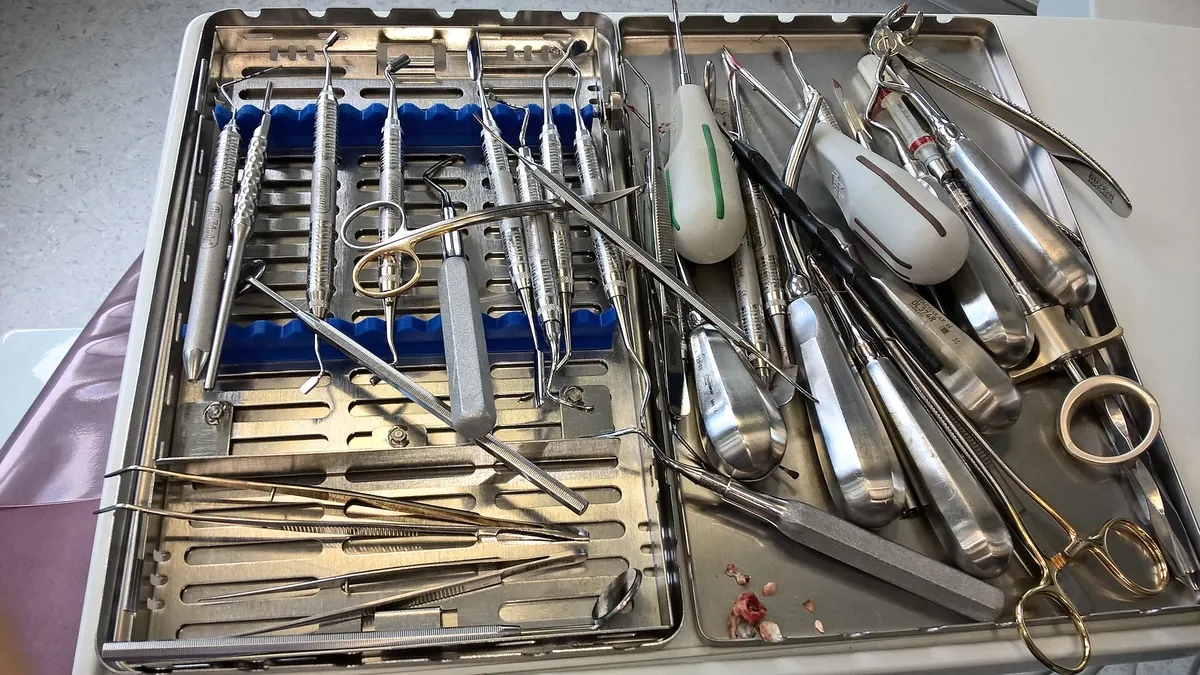
A dental check-up is a routine examination of your teeth, gums, tongue and the soft tissues of the mouth. It is sometimes called an oral health review or a dental examination. A professional cleaning, often called a scale and polish, is a separate procedure in which a dentist or dental hygienist removes hardened plaque (calculus or tartar) and surface stains that a toothbrush cannot shift. Many clinics offer the two together in one visit, but they are distinct services and may be billed separately.
Oral disease is widespread. The World Health Organization's oral health fact sheet (updated 17 March 2025) estimates that oral diseases affect nearly 3.7 billion people worldwide, with untreated tooth decay in permanent teeth the most common condition. Regular reviews are intended to find problems while they are small and to reinforce the daily habits that prevent them.
Who it is for and when it is recommended
Check-ups are for everyone with teeth, and for people with dentures or implants too, since gums and soft tissues still need monitoring. There is no single correct interval. NICE guideline CG19, Dental checks: intervals between oral health reviews (published 2004, last reviewed March 2020), recommends that the interval be set for each person after assessing their disease levels and risk. It gives a shortest interval of three months for everyone, a longest interval of twelve months for people under 18, and a longest interval of twenty-four months for adults.
The NHS page on dental check-ups (reviewed 1 April 2025) echoes this: people with good oral health may only need to attend every one to two years, while those with more problems need to be seen more often. The familiar six-monthly habit is a guide rather than a rule, so ask your dentist what interval they recommend for you and why.
See a dentist sooner than planned if you notice toothache, sensitivity to hot, cold or sweet foods, bleeding or swollen gums, persistent bad breath, a broken tooth or a mouth ulcer that has not healed within a few weeks.
What happens at the appointment
A routine review usually follows a similar pattern:
- The dentist or a team member asks about your general health, any medicines you take and any dental problems since your last visit.
- The dentist examines each tooth for decay, worn or broken fillings and cracks, and checks your gums for bleeding, pocketing and recession. They may also check your jaw joint, bite and the lining of the mouth, including a visual check for unusual patches that could need further assessment.
- X-rays are not taken at every visit. They are offered when the dentist needs to see between teeth or under the gumline, and the interval depends on your risk.
- If a cleaning is included, the clinician uses an ultrasonic scaler or hand instruments to remove calculus above and just below the gumline, then polishes the teeth with a rotating cup and a gritty paste. Some clinics use an air-polishing device.
- The visit ends with advice on brushing, cleaning between teeth, diet, smoking and alcohol, and an agreed date for the next review.
A check-up alone often takes 15 to 30 minutes. If treatment such as a filling is needed, it is usually booked as a separate appointment.
How to prepare
Bring a list of any medicines you take and tell the clinic about health conditions, allergies, pregnancy or recent surgery. Brush and clean between your teeth as normal. If you are anxious about dental visits, say so when booking; many practices will allow extra time or explain each step before they begin. Write down any symptoms you have noticed, including when they started and what makes them worse. If you have had treatment elsewhere, previous X-rays can save you from repeat imaging, so ask your former clinic for copies.
Afterwards and recovery
After a check-up alone there is nothing to recover from. After a scale and polish, your gums may feel tender for a day or two and may bleed slightly when you brush, especially if they were inflamed beforehand. Teeth can feel more sensitive to cold for a short period once calculus has been removed from exposed root surfaces. Normal eating and drinking can resume straight away. Keep up the home-care routine the clinician described; professional cleaning removes what has already built up, but daily brushing with a fluoride toothpaste and cleaning between the teeth is what prevents the next build-up.
Risks and limitations (sourced)
A dental examination is low risk. Scaling can cause temporary gum soreness and sensitivity. The main limitation is that a visual examination cannot see everything: early decay between teeth and bone loss under the gum may only show on X-rays, which is why dentists take them at risk-based intervals. A check-up also cannot substitute for daily care. The NHS gum disease page (reviewed 20 April 2026) notes that gum disease is caused by plaque that is not removed by regular brushing and cleaning between the teeth, and that untreated disease can lead to receding gums, loose teeth and dental abscesses. A cleaning every few months will not compensate for the days in between.
What affects the cost
Fees vary widely between countries, cities and clinics. Factors that commonly affect what you pay include:
- Whether the examination and the cleaning are priced together or separately.
- Whether X-rays are taken and how many.
- Who performs the cleaning (dentist or hygienist) and how long it takes; heavy calculus or deep cleaning below the gumline costs more than a routine polish.
- The clinic's location and facilities.
- Whether a national health scheme or private insurance contributes, and whether the clinic is registered with it.
Ask for an itemised quote before treatment begins. HealthNaro does not publish prices unless they come from a named, dated source.
Questions to ask the provider
- How often do you recommend I come for a review, and what is that based on?
- Will X-rays be taken today, and why?
- Is the cleaning included in the examination fee or charged separately?
- Who will carry out the cleaning, and what is their qualification?
- Did you find anything that needs treatment, and what are the options, including doing nothing for now?
- What should I change in my daily routine?
- If I need treatment, can I have a written, itemised plan before I decide?
How to find and check a provider
HealthNaro lists dental clinics and dentists with a verification label on every listing. Public listing means the details came from public sources and have not yet been checked. Contact verified means the provider has confirmed their phone number and email address. Reviewed by HealthNaro means our team has looked over the listing's details. Credentials verified means we have seen a licence or registration document. A label describes what has been checked; it is not a recommendation or a ranking, and HealthNaro does not endorse any provider.
Before booking, check the dentist's registration with the dental regulator in your country, ask whether a hygienist or a dentist will perform the cleaning, and confirm the fee structure. You can browse providers under General Dentistry. If you would like help finding a suitable clinic, our consulting service is free: send a request through the inquiry form and we will come back to you with options. You choose whom to contact.
This guide is general information, not dental advice. Speak to a registered dentist about your own situation.
Wenn Sie glauben, einen medizinischen Notfall zu haben, kontaktieren Sie sofort den örtlichen Notdienst oder gehen Sie in die nächste Notaufnahme. Warten Sie nicht auf die Antwort eines Verzeichniseintrags.
Brauchen Sie Hilfe bei der Suche nach general dentistry?
Sagen Sie uns, was Sie brauchen und wo. Wir melden uns bei Ihnen, verstehen Ihre Situation und helfen Ihnen, eine geeignete Klinik zu finden und auszuwählen. Dieser Service ist für Patienten kostenlos.
Passende Ratgeber
-
Ratgeber
A child's dental check-up: first visits, fluoride varnish and fissure sealants
When to take a child to the dentist for the first time, what the visit involves, the preventive treatments that may be offered and how to make it a calm experience.
31 Oktober 2026
-
Ratgeber
Crowns and bridges: when they are used and what the process involves
How a crown protects a weakened tooth, how a bridge replaces a missing one, the appointments involved, aftercare and the factors that drive the price.
31 Oktober 2026
-
Ratgeber
Dental fillings: materials, what happens and how to look after them
Why a filling is needed, the difference between composite, amalgam and glass ionomer, what the appointment involves, and what the regulators say about amalgam.
31 Oktober 2026