Crowns and bridges: when they are used and what the process involves
How a crown protects a weakened tooth, how a bridge replaces a missing one, the appointments involved, aftercare and the factors that drive the price.
- Escrito por
- HealthNaro Editorial Team
- Publicado
How this page was made: Drafted by the HealthNaro Editorial Team with AI assistance, checked against reputable health sources, and not yet clinically reviewed. Editorial policy
Ainda sem revisão clínica
What it is
A crown is a cap, made in a laboratory or milled in the clinic, that covers the whole visible part of a tooth to restore its shape, size and strength. The American Dental Association's MouthHealthy site describes crowns as a way to strengthen a tooth with a large filling when not enough tooth remains to hold the filling, to protect a weak tooth from breaking, to restore one that is already broken, to cover a badly discoloured or misshapen tooth, or to anchor a bridge.
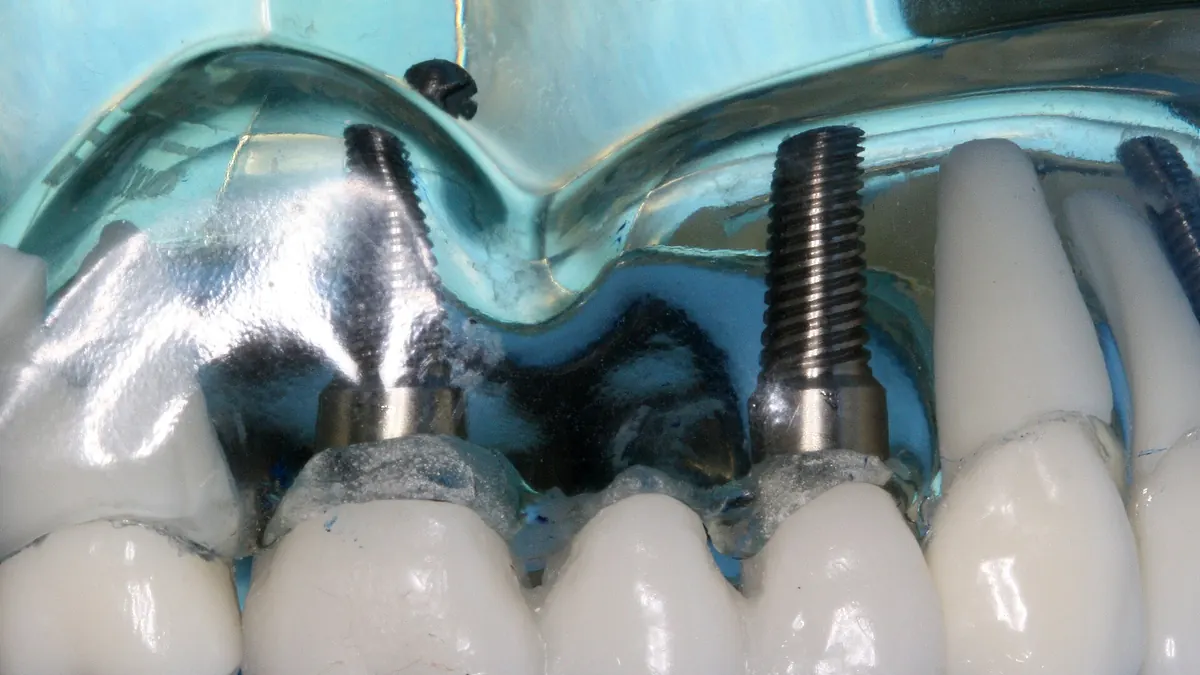
A bridge, which the ADA also calls a fixed partial denture, replaces one or more missing teeth with artificial teeth that are fixed to the neighbouring teeth or to implants. In a conventional bridge the teeth either side of the gap are crowned and the replacement tooth is joined between them. A resin-bonded bridge uses metal or ceramic wings glued to the backs of adjacent teeth instead of full crowns. An implant-supported bridge rests on implants rather than natural teeth.
Materials include porcelain or ceramic, metal alloys including gold, and porcelain fused to metal. The choice depends on the position of the tooth, the forces it takes, appearance and budget.
Who it is for and when it is recommended
A crown is often recommended after root canal treatment on a back tooth, when a tooth has cracked, when a large filling has failed, or when a tooth is severely worn. A bridge is one of three main options for a missing tooth, alongside a denture and an implant. It may suit someone who wants a fixed replacement, has healthy teeth either side of the gap, and either cannot have or prefers not to have implant surgery.
Tooth loss remains common. The World Health Organization's oral health fact sheet (updated 17 March 2025) reports that total tooth loss affects almost 7 percent of people aged 20 and over and around 23 percent of people aged 60 and over, mostly as the end point of advanced decay and severe gum disease. Replacing missing teeth helps with chewing and speech and stops neighbouring teeth drifting into the gap.
What happens at the appointment
Conventional crowns and bridges normally take two visits a week or more apart, although clinics with in-house milling machines can sometimes complete a crown in one day.
First visit. The dentist examines the tooth and usually takes an X-ray to check the root and surrounding bone. Under local anaesthetic, the tooth (or the teeth either side of a gap) is shaped by removing a thin layer all round so the crown will fit without being bulky. An impression is taken with putty or a digital scanner, along with a shade match. A temporary crown or bridge is cemented in place to protect the prepared teeth.
Second visit. The temporary is removed, the final crown or bridge is tried in, the fit, bite and colour are checked, and it is cemented or bonded permanently. Minor adjustments to the bite are made with a fine drill.
Each visit typically lasts 45 to 90 minutes.
How to prepare
Deal with any active gum disease or decay first; the NHS gum disease page (reviewed 20 April 2026) notes that untreated disease can lead to loose teeth, and a bridge is only as sound as the teeth that support it. Tell the dentist about medicines, allergies (including to metals), grinding or clenching habits and any previous reactions to anaesthetic. Ask to see the material options and, if appearance matters to you, bring a photograph of your smile as it used to be. Arrange your schedule around two visits and the gap between them.
Afterwards and recovery
While you have a temporary crown, avoid very sticky or hard foods and floss by pulling the thread out sideways rather than lifting it, so the temporary is not dislodged. Once the final restoration is fitted, expect some sensitivity to temperature for a few days. A crowned tooth still has a natural root and gum margin, so it can still decay at the edge and still needs brushing and cleaning between teeth. Under a bridge, use floss threaders, superfloss or interdental brushes to clean beneath the false tooth every day. Attend reviews at the interval your dentist recommends so the margins can be checked.
Risks and limitations (sourced)
Preparing a tooth for a crown removes healthy enamel, which cannot be replaced; the ADA's description of bridges stresses that success depends on keeping the supporting teeth healthy. Risks include sensitivity, irritation of the gum at the margin, a chipped porcelain surface, a loose or lost crown, and, less commonly, the nerve of a prepared tooth becoming inflamed and needing root canal treatment. If a supporting tooth of a bridge fails, the whole bridge may need to be replaced. Crowns and bridges wear and will not last indefinitely; how long they last depends on the material, the forces on them, your oral hygiene and whether you grind your teeth.
What affects the cost
Fees differ by country, city and clinic. Factors include:
- Material (all-ceramic, metal-ceramic, gold or other alloy, zirconia).
- Number of units: a three-unit bridge is three crowns' worth of laboratory work.
- Whether a laboratory or an in-clinic milling machine makes the restoration.
- Whether root canal treatment, a core build-up or a post is needed first.
- Whether temporaries, X-rays and the review visit are included.
- Whether the bridge rests on implants, which adds the implant surgery.
- Coverage by a national scheme or insurance.
Request an itemised written quote. HealthNaro does not publish prices unless they come from a named, dated source.
Questions to ask the provider
- Why is a crown or bridge the right option for me rather than a filling, denture or implant?
- Which material do you recommend for this tooth, and what are the trade-offs?
- How much of the tooth will be removed, and is the nerve healthy?
- How many visits are needed and how long will I wear a temporary?
- What is the total price, itemised, and does it include the laboratory fee and the review?
- What happens if the crown chips or comes off within the first year?
- How should I clean under the bridge?
How to find and check a provider
HealthNaro lists dental clinics and dentists with a verification label on every listing. Public listing means the details came from public sources and have not yet been checked. Contact verified means the provider has confirmed their phone number and email address. Reviewed by HealthNaro means our team has looked over the listing's details. Credentials verified means we have seen a licence or registration document. A label describes what has been checked; it is not a recommendation or a ranking, and HealthNaro does not endorse any provider.
Check the dentist's registration with your national dental regulator and ask whether they or a specialist prosthodontist will do the work. You can browse providers under Prosthodontics. If you would like help finding a suitable clinic, our consulting service is free: send a request through the inquiry form and we will come back to you with options. You choose whom to contact.
This guide is general information, not dental advice. Speak to a registered dentist about your own situation.
Se pensa ter uma emergência médica, contacte de imediato os serviços de emergência locais ou dirija-se à urgência mais próxima. Não espere pela resposta de uma ficha de diretório.
Precisa de ajuda para encontrar prosthodontics?
Diga-nos o que precisa e onde. Entramos em contacto consigo, percebemos a sua situação e ajudamo-lo a encontrar e escolher uma clínica adequada. Este serviço é gratuito para pacientes.
Guias relacionados
-
Guia
A child's dental check-up: first visits, fluoride varnish and fissure sealants
When to take a child to the dentist for the first time, what the visit involves, the preventive treatments that may be offered and how to make it a calm experience.
31 outubro 2026
-
Guia
Dental fillings: materials, what happens and how to look after them
Why a filling is needed, the difference between composite, amalgam and glass ionomer, what the appointment involves, and what the regulators say about amalgam.
31 outubro 2026
-
Guia
Dentures: types, the fitting process and getting used to them
Complete, partial and implant-supported dentures explained, with what to expect at each fitting appointment, how to adapt, daily care and what affects the price.
31 outubro 2026