Child vaccination visits: what to expect at each immunisation appointment
How routine childhood immunisation visits work, how to prepare and comfort a child, common after-effects and how to keep track of the schedule where you live.
- Verfasst von
- HealthNaro Editorial Team
- Veröffentlicht
How this page was made: Drafted by the HealthNaro Editorial Team with AI assistance, checked against reputable health sources, and not yet clinically reviewed. Editorial policy
Noch nicht klinisch geprüft
What it is
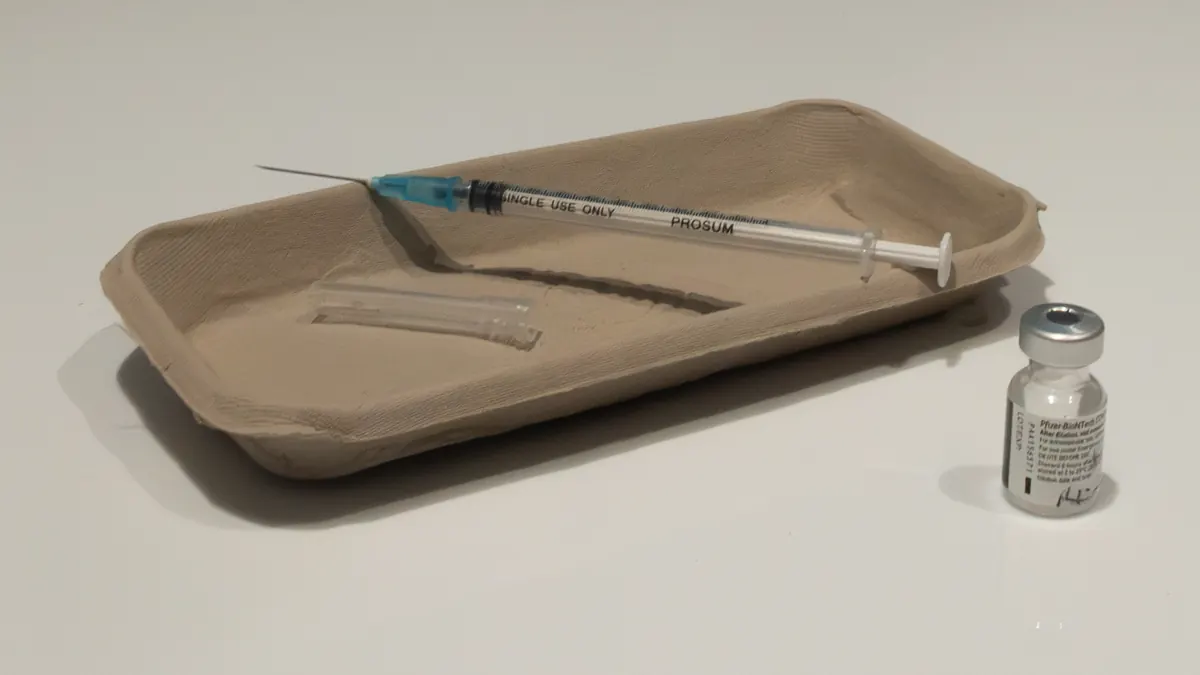
A child vaccination visit is a short appointment, usually with a nurse or clinical officer at a clinic, health centre or GP surgery, at which a child receives one or more scheduled vaccines. Each country publishes a routine immunisation schedule that sets out which vaccines are given at which ages, typically starting in the first weeks of life and continuing with boosters through school age and adolescence. The NHS schedule, for example, lists vaccines at 8, 12 and 16 weeks, at one year, at three years and four months, and in the teenage years, covering diseases including diphtheria, tetanus, pertussis, polio, Hib, hepatitis B, rotavirus, pneumococcal and meningococcal disease, measles, mumps, rubella and HPV.
The World Health Organization's vaccine safety page (23 September 2025) states that over the past 50 years essential vaccines against 14 diseases have saved at least 154 million lives. Its immunisation coverage fact sheet (15 July 2026) reports that in 2025 about 85 percent of infants worldwide received three doses of the diphtheria-tetanus-pertussis vaccine, and that 13.5 million children received no vaccines at all.
Who it is for and when it is recommended
Every child, following the schedule of the country they live in. Timing matters because schedules are designed to protect children at the ages when they are most vulnerable to each disease and to space doses for the strongest response. If a visit is missed, the child does not usually need to start again; catch-up doses can be given, so contact the clinic rather than waiting for the next scheduled age. Children with certain medical conditions, premature babies and those travelling may need additional or differently timed vaccines, which a paediatrician or the clinic will advise on.
Vaccination is usually postponed only if a child is acutely unwell with a fever. A mild cold is not normally a reason to delay; ask the clinic if unsure.
What happens at the appointment
- Check-in and history. The nurse confirms the child's identity and age, reviews the vaccination record, and asks about current illness, allergies (particularly any previous severe reaction to a vaccine), medicines, and health conditions in the child or household that might affect the choice of vaccine.
- Information and consent. You are told which vaccines are due, what they protect against and the common after-effects. Ask questions at this point.
- Administration. Most vaccines are injected into the thigh in babies and the upper arm in older children; the rotavirus vaccine is given by mouth and some flu vaccines as a nasal spray. Several injections may be given at one visit, often one in each limb.
- Observation and recording. The child is observed briefly, and the vaccines, batch numbers and date are recorded in the child's health record or card and in the clinic's register. Keep this record safe; it is needed for school entry and travel in many countries.
- Next appointment. You are told when the next doses are due.
A visit typically takes 10 to 20 minutes.
How to prepare
Bring the child's health or vaccination record. Dress the child in clothing that gives easy access to the thighs or upper arms. Feed a baby beforehand if possible; breastfeeding or a feed during or straight after the injection can comfort. For older children, explain simply and honestly that there will be a quick sharp scratch and that it helps keep them well; avoid promising it will not hurt. Bring a comfort object, and plan a quiet activity afterwards. If your child has had a reaction before, or has a bleeding disorder, allergy or immune condition, tell the clinic when booking.
Afterwards and recovery
The WHO describes typical side effects as minor and short-lived, such as a sore arm or mild fever. Redness, swelling or tenderness at the injection site, irritability, sleepiness and reduced appetite are also common for a day or two. Give fluids and comfort; ask the clinic or a pharmacist about medicines for fever rather than using them routinely in advance. Seek medical help for a high or persistent fever, a seizure, difficulty breathing, swelling of the face or lips, or a child who is unusually drowsy or inconsolable. Report any unexpected reaction to the clinic, which can record it through the national safety monitoring system.
Risks and limitations (sourced)
The WHO states that vaccines are very safe, that serious side effects are extremely rare, and that a person is far more likely to be seriously harmed by a disease than by a vaccine. Severe allergic reactions can occur, which is why vaccines are given where staff can treat them. On the question many parents ask, the WHO notes that the 1998 study suggesting a link between MMR and autism was later shown to be wrong and fraudulent, and that extensive research, including a study of over one million children, has found no link between vaccines and autism. Limitations include that no vaccine protects every recipient completely, that protection from some vaccines wanes and needs boosting, and that community protection depends on high coverage; the WHO's figure of nearly 21 million children missing their first measles dose in 2025 explains why outbreaks still occur.
What affects the cost
In many countries routine childhood vaccines are free through the national programme. Where fees apply, factors include:
- Which vaccines are in the national programme and which are optional extras (for example, additional meningococcal, chickenpox or travel vaccines in some countries).
- Combination vaccines versus separate injections.
- A consultation fee charged in addition to the vaccine.
- Private versus public clinic.
- Coverage by a national scheme or insurance.
Ask which vaccines are free under the national schedule and the price of any that are not. HealthNaro does not publish prices unless they come from a named, dated source.
Questions to ask the provider
- Which vaccines is my child receiving today, and what do they protect against?
- Are there any vaccines in the national schedule that my child has missed?
- What side effects are common with these vaccines, and when should I seek help?
- Can all the due vaccines be given today?
- How will this be recorded, and how do I get a copy if the card is lost?
- Are there additional vaccines you would suggest for my child's circumstances, and why?
- When is the next visit due?
How to find and check a provider
HealthNaro lists children's clinics, medical centres and paediatricians with a verification label on every listing. Public listing means the details came from public sources and have not yet been checked. Contact verified means the provider has confirmed their phone number and email address. Reviewed by HealthNaro means our team has looked over the listing's details. Credentials verified means we have seen a licence or registration document. A label describes what has been checked; it is not a recommendation or a ranking, and HealthNaro does not endorse any provider.
Check that the clinic is licensed and that vaccines are stored in a monitored refrigerator, and ask whether it participates in the national immunisation programme. You can browse providers under Paediatrics. If you would like help finding a suitable clinic, our consulting service is free: send a request through the inquiry form and we will come back to you with options. You choose whom to contact.
This guide is general information, not medical advice. Speak to a registered clinician about your own child.
Wenn Sie glauben, einen medizinischen Notfall zu haben, kontaktieren Sie sofort den örtlichen Notdienst oder gehen Sie in die nächste Notaufnahme. Warten Sie nicht auf die Antwort eines Verzeichniseintrags.
Brauchen Sie Hilfe bei der Suche nach paediatrics?
Sagen Sie uns, was Sie brauchen und wo. Wir melden uns bei Ihnen, verstehen Ihre Situation und helfen Ihnen, eine geeignete Klinik zu finden und auszuwählen. Dieser Service ist für Patienten kostenlos.