Cervical screening: what the test is, who it is for and what results mean
How HPV testing and cytology work, the ages and intervals recommended by WHO and national programmes, what happens at the appointment and what a positive result does and does not mean.
- Rédigé par
- HealthNaro Editorial Team
- Publié
How this page was made: Drafted by the HealthNaro Editorial Team with AI assistance, checked against reputable health sources, and not yet clinically reviewed. Editorial policy
Pas encore relu cliniquement
What it is
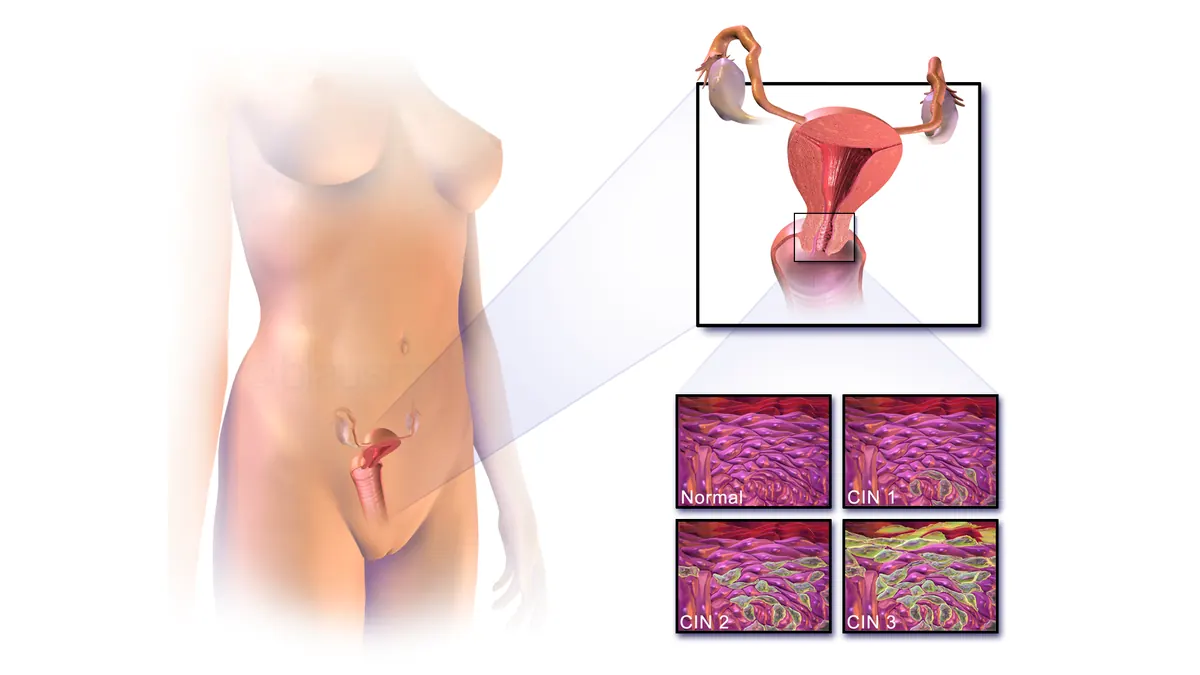
Cervical screening is a test for people without symptoms that looks for the early changes that can lead to cervical cancer, so they can be treated before cancer develops. It used to be called a smear test or Pap smear. Modern programmes increasingly test first for high-risk types of human papillomavirus (HPV), the virus that the World Health Organization's cervical cancer fact sheet (3 July 2026) says causes almost all cases; a sample of cells from the cervix is examined only if HPV is found. Some services still use cytology (looking at the cells directly) as the first test, and visual inspection with acetic acid is used in some lower-resource settings.
The WHO reports around 604,000 new cases and 280,000 deaths from cervical cancer in 2024, with the highest rates in low- and middle-income countries, and describes the disease as largely preventable through HPV vaccination and regular screening.
Who it is for and when it is recommended
Screening is for people with a cervix who have no symptoms. The WHO recommends screening with a high-performance test such as an HPV test every five to ten years from age 30, and every three to five years from age 25 for women living with HIV, with a minimum of two lifetime screens by ages 35 and 45. National programmes set their own ages and intervals: the NHS, for example, invites women aged 25 to 64 every five years. Follow the programme where you live, and ask your clinic how often you should attend if you fall outside it.
Screening is not for investigating symptoms. Bleeding between periods, after sex or after the menopause, unusual discharge or persistent pelvic pain should be assessed by a doctor regardless of when your last screening was or what it showed.
HPV vaccination, which the WHO prioritises for girls aged 9 to 14, reduces risk but does not remove the need for screening, because vaccines do not cover every high-risk type.
What happens at the appointment
The test is done by a nurse, midwife, doctor or trained health worker and takes a few minutes within a longer appointment.
- You undress from the waist down and lie on an examination couch, usually on your back with knees bent, covered with a sheet.
- A speculum, a smooth plastic or metal instrument, is gently inserted into the vagina and opened so the cervix can be seen.
- A small soft brush is rotated against the cervix to collect cells, then placed in a pot of liquid.
- The speculum is removed and you can get dressed.
Some programmes offer self-sampling, where you collect a vaginal swab yourself for HPV testing; the WHO states that self-collected samples are as reliable as those taken by a health worker for HPV testing. Where screening is positive, the next step is usually colposcopy, a closer examination of the cervix with a magnifying instrument, with treatment of precancerous areas if needed. The WHO notes that in some services screening and treatment can happen in the same visit.
How to prepare
Try to book for a time when you are not on your period, as bleeding can affect the sample. Avoid vaginal medicines, lubricants or spermicides for a couple of days beforehand unless advised otherwise. Wear something easy to remove from the waist down. If you find examinations difficult because of pain, past trauma or anxiety, say so when booking; you can ask for a smaller speculum, a particular practitioner, a chaperone, more time or to insert the speculum yourself. You can ask to stop at any point.
Afterwards and recovery
You can return to normal activities immediately. Light spotting for a day or so is common. Results typically arrive by letter, message or app within a few weeks, depending on the service. Make sure you know how you will be told and what to do if you hear nothing. A result showing HPV without cell changes usually means a repeat test in a year; HPV with cell changes usually leads to colposcopy. Keep your contact details up to date so the next invitation reaches you.
Risks and limitations (sourced)
The test itself is safe; discomfort and brief spotting are the usual effects. The limitations are those of any screening test. No test detects every abnormality, which is why regular attendance matters more than any single result, and why symptoms must still be reported. HPV is very common, and the WHO notes that almost all sexually active people are infected at some point and most infections clear on their own, so a positive HPV result is not a diagnosis of cancer and does not mean a partner has been unfaithful. Follow-up of positive results can cause anxiety and, in some cases, treatment of changes that would have resolved without it; the WHO notes it usually takes 15 to 20 years for abnormal cells to become cancer, which is why intervals of several years between tests are considered safe in well-run programmes.
What affects the cost
Many countries provide screening free within a national programme. Where fees apply, factors include:
- The type of test: HPV testing, cytology, co-testing or visual inspection.
- Whether the consultation fee is separate from the laboratory fee.
- Self-sampling kits versus clinic sampling.
- Follow-up: colposcopy, biopsy and treatment of precancer if needed.
- Whether an HPV vaccination is being offered alongside.
- Coverage by a national scheme or insurance.
Ask what the quoted price includes and what a positive result would lead to. HealthNaro does not publish prices unless they come from a named, dated source.
Questions to ask the provider
- Which test will be used, and how often should I be screened given my age and history?
- How and when will I receive my results?
- What happens if HPV is found, and what if cell changes are found?
- Is self-sampling available?
- Can I request a chaperone, a particular practitioner or a smaller speculum?
- Do I still need screening if I have had the HPV vaccine or have gone through the menopause?
- What would my symptoms, if any, need in addition to screening?
How to find and check a provider
HealthNaro lists hospitals, clinics and gynaecologists with a verification label on every listing. Public listing means the details came from public sources and have not yet been checked. Contact verified means the provider has confirmed their phone number and email address. Reviewed by HealthNaro means our team has looked over the listing's details. Credentials verified means we have seen a licence or registration document. A label describes what has been checked; it is not a recommendation or a ranking, and HealthNaro does not endorse any provider.
Check the practitioner's registration with your national regulator and ask which laboratory processes the samples. You can browse providers under Obstetrics and Gynaecology. If you would like help finding a suitable clinic, our consulting service is free: send a request through the inquiry form and we will come back to you with options. You choose whom to contact.
This guide is general information, not medical advice. Speak to a registered clinician about your own situation.
Si vous pensez être en situation d'urgence médicale, contactez immédiatement les services d'urgence locaux ou rendez-vous aux urgences les plus proches. N'attendez pas la réponse d'une fiche d'annuaire.
Besoin d'aide pour trouver obstetrics and gynaecology ?
Dites-nous ce dont vous avez besoin et où. Nous vous contactons, comprenons votre situation et vous aidons à trouver et à choisir une clinique adaptée. Ce service est gratuit pour les patients.
Guides associés
-
Guide
Antenatal care: the appointments, tests and scans of pregnancy
Why regular antenatal contacts matter, what happens at the booking visit and later appointments, the routine tests and scans, and the questions to ask your midwife or doctor.
31 octobre 2026