Cataract surgery: how it works, recovery and the risks to understand
What a cataract is, when surgery is recommended, what happens on the day, lens choices, the recovery timeline and the complications to discuss with your surgeon.
- Escrito por
- HealthNaro Editorial Team
- Publicado
How this page was made: Drafted by the HealthNaro Editorial Team with AI assistance, checked against reputable health sources, and not yet clinically reviewed. Editorial policy
Aún sin revisión clínica
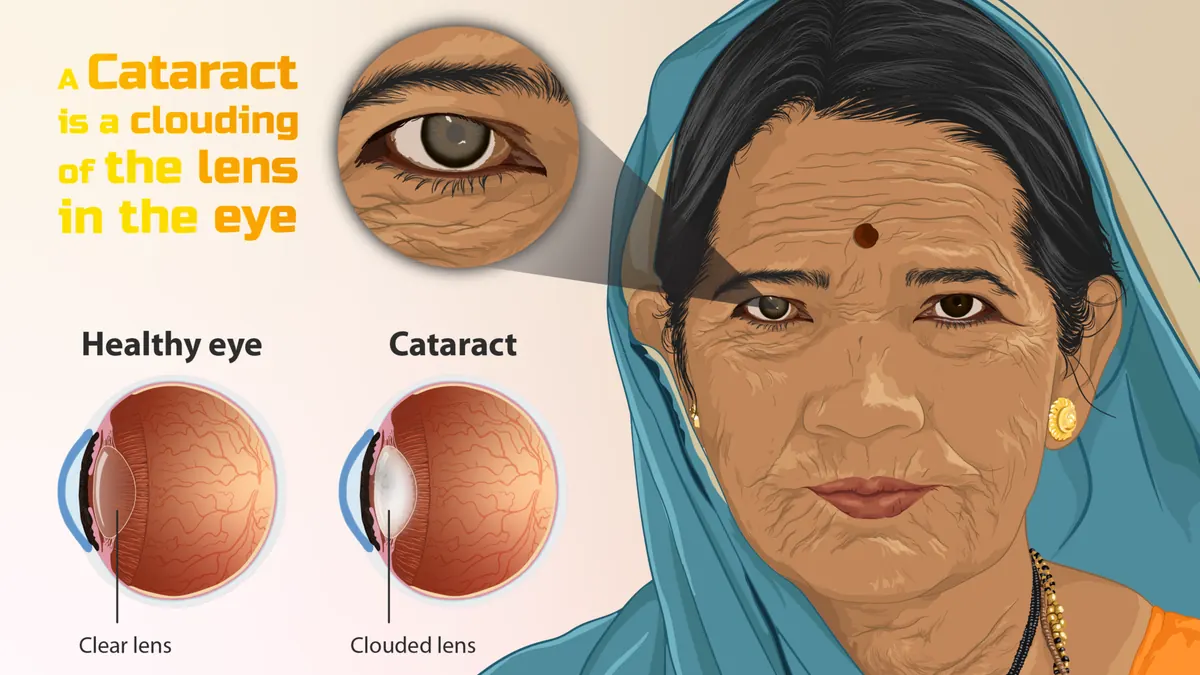
What it is
A cataract is clouding of the natural lens inside the eye. The American Academy of Ophthalmology compares it to looking through a foggy or dusty windscreen: things appear blurry, hazy or less colourful. Cataract surgery removes the cloudy lens and replaces it with a clear artificial lens called an intraocular lens (IOL). The NHS describes it as usually done under local anaesthetic, taking 20 to 45 minutes, with most people going home the same day. Surgery is the only way to remove a cataract; glasses can help for a time but do not reverse the clouding.
Cataract is the single largest cause of blindness worldwide. The World Health Organization's blindness and vision impairment fact sheet (10 February 2026) estimates that among the one billion people whose vision impairment could be prevented or addressed, cataract accounts for 94 million, and that one in two people who need cataract surgery do not have access to it.
Who it is for and when it is recommended
Cataracts mainly affect older adults, though they can be present from birth or follow injury, some medicines or conditions such as diabetes. The NHS cataract surgery page notes that surgery in adults is not always needed straight away but may be recommended when cataracts affect daily life, such as reading, driving or recognising faces. NICE guideline NG77, Cataracts in adults (last reviewed May 2025), advises against restricting access to surgery on the basis of visual acuity alone; the decision should rest on how the cataract affects your life and the balance of benefit and risk for you. Children with cataracts are usually operated on as soon as possible so that their vision can develop.
If you have cataracts in both eyes, the NHS notes they are usually treated on separate days.
What happens at the appointment
Pre-assessment. A specialist examines and measures your eye (biometry) to calculate the power of the new lens, discusses lens options and anaesthetic, and reviews your health and medicines. NG77 includes recommendations on preventing wrong-lens errors, so expect careful checking of your identity and the planned lens.
On the day. You will be awake. Drops are given to dilate the pupil, and the eye is numbed with drops, an injection or both; a light sedative may be offered. The surgeon makes a tiny incision at the edge of the cornea, opens the front of the lens capsule, uses ultrasound (phacoemulsification) to break up the cloudy lens and removes the fragments by suction, then folds the new lens through the incision into the capsule, where it unfolds and stays. Stitches are usually not needed. The NHS says the operation takes 20 to 45 minutes; the AAO describes a short rest in recovery of 15 to 30 minutes before going home with a shield over the eye.
Lens options. A standard monofocal lens gives clear focus at one distance, usually far, with reading glasses for near. Toric lenses correct astigmatism. Multifocal or extended-depth-of-focus lenses aim to reduce dependence on glasses but can produce glare or haloes and are not suitable for everyone. NICE has said it plans to update its lens-selection recommendations, so ask your surgeon for current evidence.
How to prepare
Follow the clinic's instructions about food and drink; the AAO notes some surgeons ask for no solid food for several hours beforehand, while others allow a light meal under local anaesthetic. Keep taking regular medicines unless told otherwise, and tell the team about blood thinners, medicines for prostate enlargement and diabetes. Leave contact lenses out for the period requested. Arrange for someone to take you home and, ideally, to help for the first day. Start any pre-operative drops exactly as prescribed.
Afterwards and recovery
The NHS describes blurry vision for a few hours from the dilating drops, a sore or gritty eye for a few days, and improvement over several days, with drops to prevent infection and inflammation for about four weeks. You should not drive until your vision meets the legal standard again and your surgeon agrees. Common advice includes avoiding rubbing the eye, keeping water out of it for a period, and avoiding strenuous activity, swimming and dusty environments for the time the clinic specifies. Your glasses prescription will change; a new one is usually issued some weeks after surgery once the eye has settled. Contact the clinic urgently for increasing pain, worsening vision, increasing redness or a sudden shower of floaters or flashes.
Risks and limitations (sourced)
The NHS says the procedure is usually successful and serious complications are rare, but that all surgery carries risk and some complications need further surgery. The AAO lists eye infection, bleeding, swelling, retinal detachment, a dislocated lens and, in rare cases, loss of vision. A common later development is posterior capsule opacification, where the membrane behind the new lens becomes cloudy months or years later; it is treated with a short laser procedure. Both sources stress that cataract surgery will not restore vision lost to other conditions such as macular degeneration, glaucoma or diabetic retinopathy, so your expectations should be set against the health of the rest of your eye.
What affects the cost
Fees vary by country, hospital and surgeon, and many national schemes fund cataract surgery. Where fees apply, factors include:
- Lens type: standard monofocal versus toric, multifocal or extended-depth-of-focus lenses.
- Surgical technique, including any laser-assisted steps the clinic offers.
- Whether pre-assessment, biometry, drops and follow-up visits are included.
- Anaesthetic type and whether an anaesthetist is present.
- Hospital versus day-surgery centre.
- Treating one eye or both.
- Coverage by a national scheme or insurance.
Ask for an itemised written quote covering the whole episode. HealthNaro does not publish prices unless they come from a named, dated source.
Questions to ask the provider
- How is the cataract affecting my sight, and what improvement can I realistically expect given the rest of my eye?
- Which lens do you recommend for me and why, and what are the trade-offs of the alternatives?
- Who will perform the surgery, and how many of these operations do they do each year?
- What anaesthetic will be used?
- What are the specific risks in my case, and what is your complication rate?
- What is included in the price, and what would any further treatment cost?
- When can I drive, work and exercise again?
How to find and check a provider
HealthNaro lists eye clinics and ophthalmologists with a verification label on every listing. Public listing means the details came from public sources and have not yet been checked. Contact verified means the provider has confirmed their phone number and email address. Reviewed by HealthNaro means our team has looked over the listing's details. Credentials verified means we have seen a licence or registration document. A label describes what has been checked; it is not a recommendation or a ranking, and HealthNaro does not endorse any provider.
Check that the surgeon is registered as a specialist ophthalmologist with your national medical regulator and that the facility is licensed for surgery. You can browse providers under Ophthalmology. If you would like help finding a suitable clinic, our consulting service is free: send a request through the inquiry form and we will come back to you with options. You choose whom to contact.
This guide is general information, not medical advice. Speak to a registered ophthalmologist about your own situation.
Si cree que tiene una emergencia médica, contacte de inmediato con los servicios de emergencia locales o acuda al servicio de urgencias más cercano. No espere la respuesta de una ficha de directorio.
¿Necesita ayuda para encontrar ophthalmology?
Díganos qué necesita y dónde. Nos ponemos en contacto con usted, entendemos su situación y le ayudamos a encontrar y elegir una clínica adecuada. Este servicio es gratuito para los pacientes.
Guías relacionadas
-
Guía
An eye test and new glasses: what happens and how often to go
What a comprehensive eye examination checks beyond reading a chart, who should have one and how often, choosing spectacles or contact lenses, and what affects the price.
31 octubre 2026