Vision loss in numbers: what the WHO World Report on Vision and its 2026 update say
At least 2.2 billion people have a vision impairment and about 1 billion of those cases could have been prevented or are still unaddressed. The verified WHO figures, the main causes, and why sub-Saharan Africa stands out.
- Escrito por
- HealthNaro Editorial Team
- Publicado
How this page was made: Drafted by the HealthNaro Editorial Team with AI assistance, checked against reputable health sources, and not yet clinically reviewed. Editorial policy
Ainda sem revisão clínica
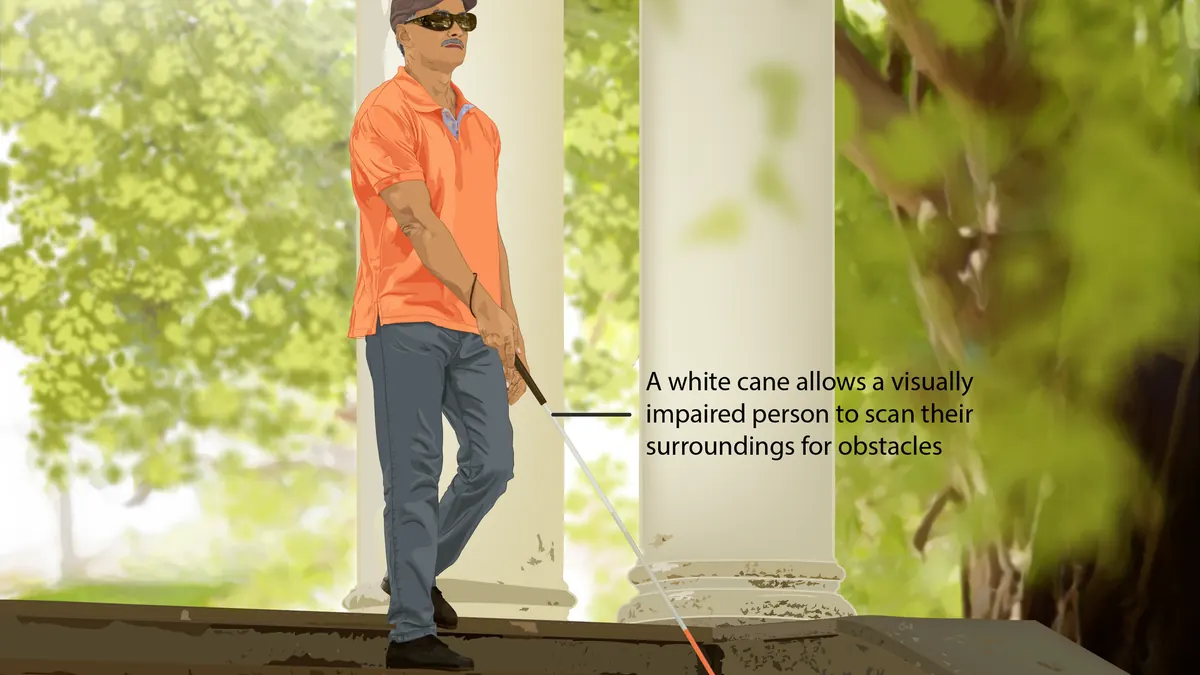
Most vision loss is not sudden. It builds up over years, through a cataract that slowly clouds the lens, a pair of glasses that was never prescribed, or raised eye pressure that nobody measured. The World Health Organization (WHO) published its first World Report on Vision in October 2019 and keeps the figures current in a fact sheet, last updated in February 2026. This post sets out those figures and what they imply for anyone who has been putting off an eye test.
The headline numbers
| Measure | Figure | Source |
|---|---|---|
| People with a near or distance vision impairment | at least 2.2 billion | WHO blindness and visual impairment fact sheet, 2026 |
| Cases that could have been prevented or have yet to be addressed | at least 1 billion | WHO fact sheet, 2026; WHO World Report on Vision, 2019 |
| Annual global productivity loss linked to vision impairment | about US$ 411 billion (purchasing power parity) | WHO fact sheet, 2026 |
| Estimated cost of meeting the unmet need | about US$ 25 billion | WHO fact sheet, 2026 |
The second line is the one that matters for patients. Roughly half of all vision impairment is either preventable or treatable with services that already exist: an eye examination, spectacles, cataract surgery or management of glaucoma and diabetic eye disease.
What causes the unaddressed cases
WHO breaks the 1 billion figure down by cause. Presbyopia, the age-related loss of near focus that makes reading difficult from the mid-forties onwards, accounts for the largest part, and it is corrected with reading glasses.
| Cause | People affected (unaddressed) | Source |
|---|---|---|
| Presbyopia (near vision) | about 826 million | WHO fact sheet, 2026 |
| Cataract | about 94 million | WHO fact sheet, 2026 |
| Uncorrected refractive error (distance) | about 88 million | WHO fact sheet, 2026 |
| Age-related macular degeneration | about 8 million | WHO fact sheet, 2026 |
| Glaucoma | about 7.7 million | WHO fact sheet, 2026 |
| Diabetic retinopathy | about 3.9 million | WHO fact sheet, 2026 |
Three of the six causes, presbyopia, refractive error and cataract, make up well over 90% of the unaddressed total, and all three are dealt with by routine services: a sight test and glasses, or a cataract operation. The remaining three, macular degeneration, glaucoma and diabetic retinopathy, are the ones where early detection changes the outcome, because damage to the retina or the optic nerve generally cannot be reversed.
Why where you live matters
WHO's figures show a steep gradient between regions.
| Comparison | Figure | Source |
|---|---|---|
| Distance vision impairment, low- and middle-income regions compared with high-income regions | about 4 times higher | WHO fact sheet, 2026 |
| Unaddressed near vision impairment in western, eastern and central sub-Saharan Africa | more than 80% | WHO fact sheet, 2026 |
| Unaddressed near vision impairment in high-income regions | below 10% | WHO fact sheet, 2026 |
| People in low-income countries who need glasses but lack access | about 2 in 3 | WHO fact sheet, 2026 |
| People worldwide who need cataract surgery but lack access | about 1 in 2 | WHO fact sheet, 2026 |
Eastern sub-Saharan Africa, which includes Kenya, is in the group where more than 80% of near vision impairment goes uncorrected. In plain terms, most adults over about 45 in the region who struggle to read small print have never been given reading glasses. WHO's SPECS 2030 initiative, mentioned in the same fact sheet, targets more than 800 million people who need refractive error services.
Who should have an eye examination
WHO notes that most people with vision impairment and blindness are over 50, and that need rises with age. The following situations are generally reasons to book an eye examination rather than to wait:
- difficulty reading, or holding text further away than before;
- blurred distance vision, or squinting to see signs and screens;
- a known diagnosis of diabetes or high blood pressure, both of which affect the retina;
- a family history of glaucoma;
- a child who sits very close to screens, tilts the head to see, or is falling behind at school.
An eye examination is painless. An optometrist measures how well you see and whether glasses would help; an ophthalmologist is a medical doctor who diagnoses and treats eye disease and performs surgery. Many clinics offer both. An examination does not commit you to buying spectacles from the same clinic.
How we checked these figures
We opened the WHO fact sheet on blindness and visual impairment, dated 10 February 2026, and quoted its figures as printed, rounding where appropriate. We confirmed on the WHO publications page that the World Report on Vision was published on 8 October 2019 and that it gives the same 2.2 billion and 1 billion totals. We did not find a verified, dated figure for vision impairment in Kenya specifically from WHO or the Ministry of Health, so none is included; the regional figures for sub-Saharan Africa are used instead. All percentages are WHO's own.
If you want an eye test or an assessment of an eye condition, the ophthalmology and optometry pages list providers with their verification level. You can also tell us what you need and we will help you find a suitable clinic; the service is free.
Se pensa ter uma emergência médica, contacte de imediato os serviços de emergência locais ou dirija-se à urgência mais próxima. Não espere pela resposta de uma ficha de diretório.
Precisa de ajuda para encontrar um prestador?
Diga-nos o que precisa e onde. Entramos em contacto consigo, percebemos a sua situação e ajudamo-lo a encontrar e escolher uma clínica adequada. Este serviço é gratuito para pacientes.
Mais do blogue
-
Artigo de blogue
Digital eye strain: why screens tire your eyes and what helps
What causes tired, dry or blurry eyes after screen use, practical steps from the American Academy of Ophthalmology, and when to book an eye test.
3 novembro 2026
-
Artigo de blogue
Optometrist or ophthalmologist: which eye professional to see
What optometrists, ophthalmologists and opticians do, which one to see for a sight test, glasses or an eye condition, and how often adults may need an eye examination.
1 novembro 2026
-
Artigo de blogue
Eczema or psoriasis: how to tell the difference
How atopic eczema and psoriasis typically look, where they appear, when they start and when to see a doctor for either.
3 novembro 2026