Digital eye strain: why screens tire your eyes and what helps
What causes tired, dry or blurry eyes after screen use, practical steps from the American Academy of Ophthalmology, and when to book an eye test.
- Verfasst von
- HealthNaro Editorial Team
- Veröffentlicht
How this page was made: Drafted by the HealthNaro Editorial Team with AI assistance, checked against reputable health sources, and not yet clinically reviewed. Editorial policy
Noch nicht klinisch geprüft
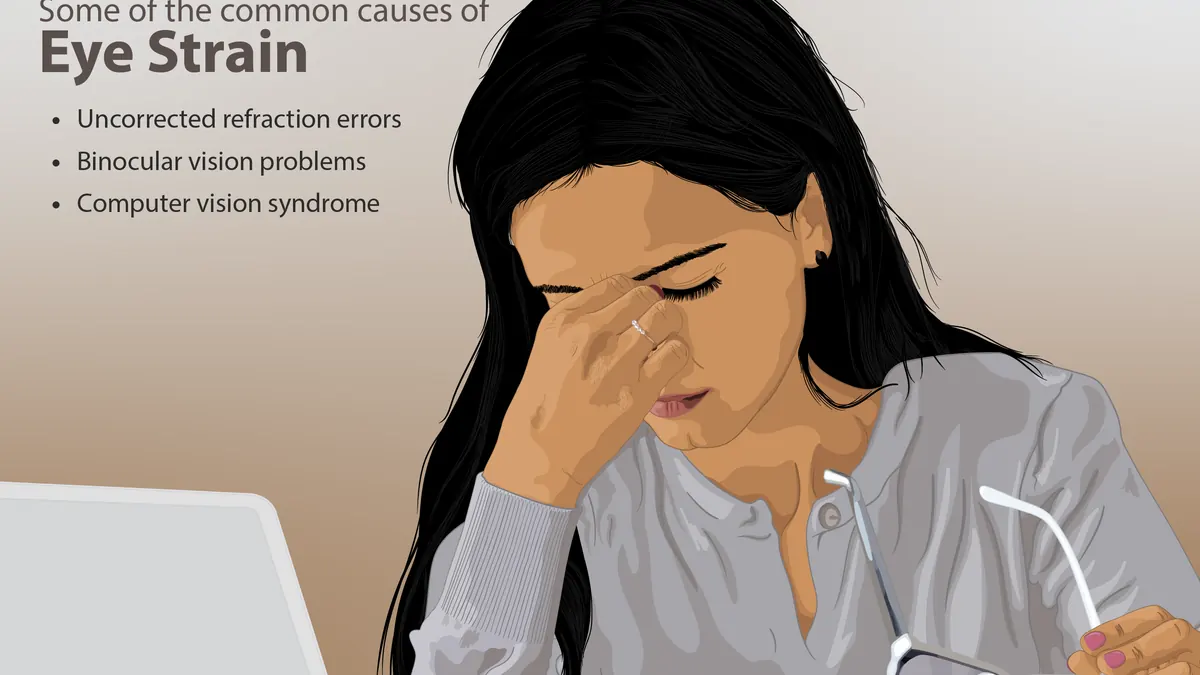
After a long day at a screen, many people notice tired, dry or blurry eyes, sometimes with a headache. This is often called digital eye strain. The reassuring part, according to the American Academy of Ophthalmology (AAO), is that looking at screens for long periods does not permanently damage the eyes. The uncomfortable part is that symptoms are common and a few habit changes can help. This post explains what to look for, what may ease it and when eye strain is not the whole story.
The short answer
- The AAO says that looking at a computer, phone or other screen for a long time will not permanently damage your eyes, but your eyes may feel uncomfortable.
- Typical symptoms are blurred vision, aching eyes, dryness, watering or stinging.
- Blinking more often, looking away from the screen regularly, adjusting position, lighting and glare, and treating dry eyes can help.
- If symptoms are persistent, or you notice red, painful, light-sensitive eyes or any change in vision, see an eye professional.
Why screens tire the eyes
The AAO describes digital eye strain as no different from the symptoms you can get from reading, writing or close work like sewing for long periods. Two things are at play.
First, blinking. The AAO says people normally blink about 15 times a minute, but studies show only about 5 to 7 blinks a minute during screen use. Blinking spreads moisture over the surface of the eye, so fewer blinks mean a drier surface. The NHS lists looking at a computer screen for a long time without a break as one factor that makes dry eyes more likely, along with air-conditioned or heated rooms. Our post on dry eyes symptoms goes into this.
Second, focus and set-up. Reading small text at close range for hours means the eyes keep working to focus. Glare, a screen that is much brighter than the room, and a poor position all add to the effort.
Practical steps that may help
The AAO and NHS give a consistent set of suggestions:
- Blink on purpose. A sticky note near the screen can serve as a reminder.
- Take breaks. Look up from the screen and look at something in the distance for a short time. Many people use a rule of a regular pause every so often, and what matters is that you actually do it.
- Adjust brightness and contrast. Match the screen's brightness to the light in the room, and raise contrast if text looks faint.
- Reduce glare. A matte screen filter, a change in lighting or moving the screen away from windows can help.
- Check your position. The AAO suggests sitting about 25 inches (roughly an arm's length) from a computer screen, with the screen positioned so your eyes look slightly downward. The NHS suggests the screen is just below eye level.
- Moisten the air. If the room is dry or warm, a humidifier can help.
- Ask a pharmacist about artificial tears if your eyes feel dry. The AAO notes they can refresh the eyes, and a pharmacist can say which type suits you.
If you wear contact lenses
The AAO notes that contact lens wearers who use screens for long periods may find dry eye an ongoing problem. It suggests giving your eyes a break by wearing glasses instead, not sleeping in your lenses even if labelled extended wear, and keeping to good cleaning practice. Our post on how to care for contact lenses has the basics.
When it may be more than eye strain
Other causes should be considered if symptoms do not fit. An out-of-date prescription, an uncorrected need for glasses or reading glasses, dry eye disease and some medical conditions can all produce similar symptoms.
Book an eye test if:
- discomfort continues even after you have changed your habits
- you get frequent headaches after close work
- you hold things closer or further away to see them, or squint
- you have not had an eye test for two years, which is the point at which the NHS advises going to an optician. Your optometrist will tell you if you need them more often.
Our eye test and glasses guide explains what the visit involves, and you can read about the eye examination service.
Seek prompt care if
The AAO advises seeing an eye doctor if your eyes are consistently red, blurry or watery, or become sensitive to light or painful. The NHS says a red, painful eye, or sudden changes in sight such as wavy lines, flashing or loss of vision, need urgent attention. Do not wait for a routine appointment.
Children and screens
Children also get tired eyes from close work, and the AAO says eye strain from screens is not unique to adults. Encourage breaks, outdoor time and good lighting, and take a child for an eye test if they complain of headaches or sore eyes, rub their eyes, or sit very close to screens. Our post on short-sightedness in children covers the signs to watch for.
Frequently asked questions
Do blue light glasses prevent eye strain?
The AAO article we reviewed focuses on blinking, breaks, position, lighting and glare and does not present special lenses as the answer. If you are thinking of buying special lenses, ask an optometrist what would help in your case.
Can screens make short-sightedness worse?
The AAO says screens do not permanently damage the eyes. Short-sightedness has several influences, and an optometrist can discuss risk factors in a child.
How long can I look at a screen?
There is no safe or unsafe number. What matters is taking breaks and noticing symptoms. If your eyes ache or blur, pause.
Is a headache from screen use a reason to see a doctor?
Headaches that come with close work may be linked to eyes that need glasses, so an eye test is sensible. Severe, sudden or unusual headaches need medical advice.
General information only
This article is general information, not medical advice. If you have sudden loss of vision, a curtain across your sight, severe eye pain, or an eye injury, seek urgent medical care. To ask HealthNaro for help finding an eye professional, you can send an inquiry.
Wenn Sie glauben, einen medizinischen Notfall zu haben, kontaktieren Sie sofort den örtlichen Notdienst oder gehen Sie in die nächste Notaufnahme. Warten Sie nicht auf die Antwort eines Verzeichniseintrags.
Brauchen Sie Hilfe bei der Suche nach einem Anbieter?
Sagen Sie uns, was Sie brauchen und wo. Wir melden uns bei Ihnen, verstehen Ihre Situation und helfen Ihnen, eine geeignete Klinik zu finden und auszuwählen. Dieser Service ist für Patienten kostenlos.
Mehr aus dem Blog
-
Blogbeitrag
Optometrist or ophthalmologist: which eye professional to see
What optometrists, ophthalmologists and opticians do, which one to see for a sight test, glasses or an eye condition, and how often adults may need an eye examination.
1 November 2026
-
Blogbeitrag
Vision loss in numbers: what the WHO World Report on Vision and its 2026 update say
At least 2.2 billion people have a vision impairment and about 1 billion of those cases could have been prevented or are still unaddressed. The verified WHO figures, the main causes, and why sub-Saharan Africa stands out.
12 Oktober 2026
-
Blogbeitrag
Eczema or psoriasis: how to tell the difference
How atopic eczema and psoriasis typically look, where they appear, when they start and when to see a doctor for either.
3 November 2026